

Why the Best Idea in the Room Often Goes Unspoken
Why the Best Idea in the Room Often Goes Unspoken
Strong hierarchy and a drive for harmony can silence the people who know most. Inclusive leadership is the practical fix.
Most Asia Pacific nations score high on power distance and collectivism, with Australia and New Zealand the notable exceptions (Hofstede, 2011). In plain terms, people defer to authority and value group harmony. That builds trust. It can also keep expertise out of the room.
In high power distance settings, junior members may stay quiet even when they hold critical knowledge. Their willingness to speak depends on whether the leader creates an inclusive environment (Guo et al., 2022). Collectivist norms add a second brake: fear of “loss of face” can stop people from challenging the group (Wang & Shi, 2020).
We interviewed 66 non-executive directors across Northeast Asia, Southeast Asia, South Asia and Oceania. They described the same problem and a consistent set of remedies (Steel, 2026):
Consult before the meeting. One director noted the boardroom is often “just the final step.” Testing ideas in small settings reduced loss of face and made challenge safer.
Invite, don’t wait. Respected chairs went around the table and drew out quieter members. As one director put it, it is “not only what’s being said, but what’s not being said.”
Explain the decision. Trusted leaders integrated several views and then shared their reasoning, so people accepted the outcome even when it was not their first position.
Adapt the delivery. “It’s not what you say, it’s how you say that matters.”
Structured round-robin speaking and explicit invitations to dissent have also been linked to better participation in high power distance teams (Ashikali et al., 2021).
Implication for SMEs. Small leadership teams are rarely free of hierarchy. A founder or long-tenured manager can have the same silencing effect as a board chair. Silence is a risk signal. Leaders who ask for dissent, in private first if needed, reduce the chance that a known problem stays unspoken.
Limits. This is an exploratory study of volunteers, and the interview data were coded against a preset framework. The findings suggest practice. They do not prove outcomes.
References
Ashikali, T., Groeneveld, S. & Kuipers, B. (2021). Review of Public Personnel Administration, 41(3), 497–519.
Guo, Y., Zhu, Y. & Zhang, L. (2022). Current Psychology, 41, 1301–1310.
Hofstede, G. (2011). Readings in Psychology and Culture, 2(1). https://doi.org/10.9707/2307-0919.1014
Steel, A. (2026). Inclusion as strategic advantage. In The Handbook of Inclusive Leadership (Ch. 12). De Gruyter. https://doi.org/10.1515/9783111662145-013
Wang, F. & Shi, W. (2020). Psychological Reports. https://doi.org/10.1177/0033294120953558

Capable Leaders Are Not Automatically Inclusive.
High-performing directors tend to be driven, curious and willing to challenge. Those same traits can crowd out other voices unless leaders practise inclusion on purpose.
Hiring and appointment decisions often rest on skills and experience. Personality shapes how those skills are used. We measured personality in 66 Asia Pacific non-executive directors using the Ten-Item Personality Inventory (Gosling et al., 2003) and the Short Grit Scale (Duckworth & Quinn, 2009). Scores below are on a seven-point scale (Steel, 2026).
Conscientiousness was very high (M = 6.42) and openness was high (M = 6.02). These directors are structured, diligent and open to new ideas.
Neuroticism was low (M = 2.32), which points to emotional stability.
Agreeableness was low to moderate (M = 2.77). This suggests a willingness to challenge ideas and prioritise outcomes.
Consistency of interest exceeded perseverance of effort on grit, which the study did not expect to be so clear.
This profile has a built-in tension. Low agreeableness helps leaders question weak plans. It can also make colleagues less willing to speak. The directors’ own accounts point to the remedy: curiosity, humility and cultural intelligence, three of the six inclusive leadership behaviours (Bourke & Espedido, 2019). One director described listing their own gaps up front: “here are the things which I don’t know.”
The study proposes inclusive leadership as the mechanism that turns strong individual traits into strong collective decisions. Fostering psychological safety allows high-openness people to share novel ideas and persist through disagreement (Choi et al., 2015). This is a proposed model, not a tested one.
Implication for SMEs. Assess how a candidate leads others, not only what they know. Ask how they invite dissent, how they handle being wrong, and how they adapt to different communication styles. These behaviours are teachable, and they are a direct response to talent risk.
Limits. The reliability of the grit measure was low in this sample (α = 0.49), consistent with earlier findings in collectivist settings (Datu et al., 2016). Grit results should be read with caution.
References
Bourke, J. & Espedido, A. (2019). Why inclusive leaders are good for organizations, and how to become one. Harvard Business Review, 29 March.
Choi, S. B., Tran, T. B. H. & Park, B. I. (2015). Social Behavior and Personality, 43(6), 931–943.
Datu, J. A. D., Valdez, J. P. M. & King, R. B. (2016). Current Psychology, 35, 121–130.
Duckworth, A. L. & Quinn, P. D. (2009). Journal of Personality Assessment, 91(2), 166–174.
Gosling, S. D., Rentfrow, P. J. & Swann, W. B. (2003). Journal of Research in Personality, 37(6), 504–528.
Steel, A. (2026). Inclusion as strategic advantage. In The Handbook of Inclusive Leadership (Ch. 12). De Gruyter. https://doi.org/10.1515/9783111662145-013
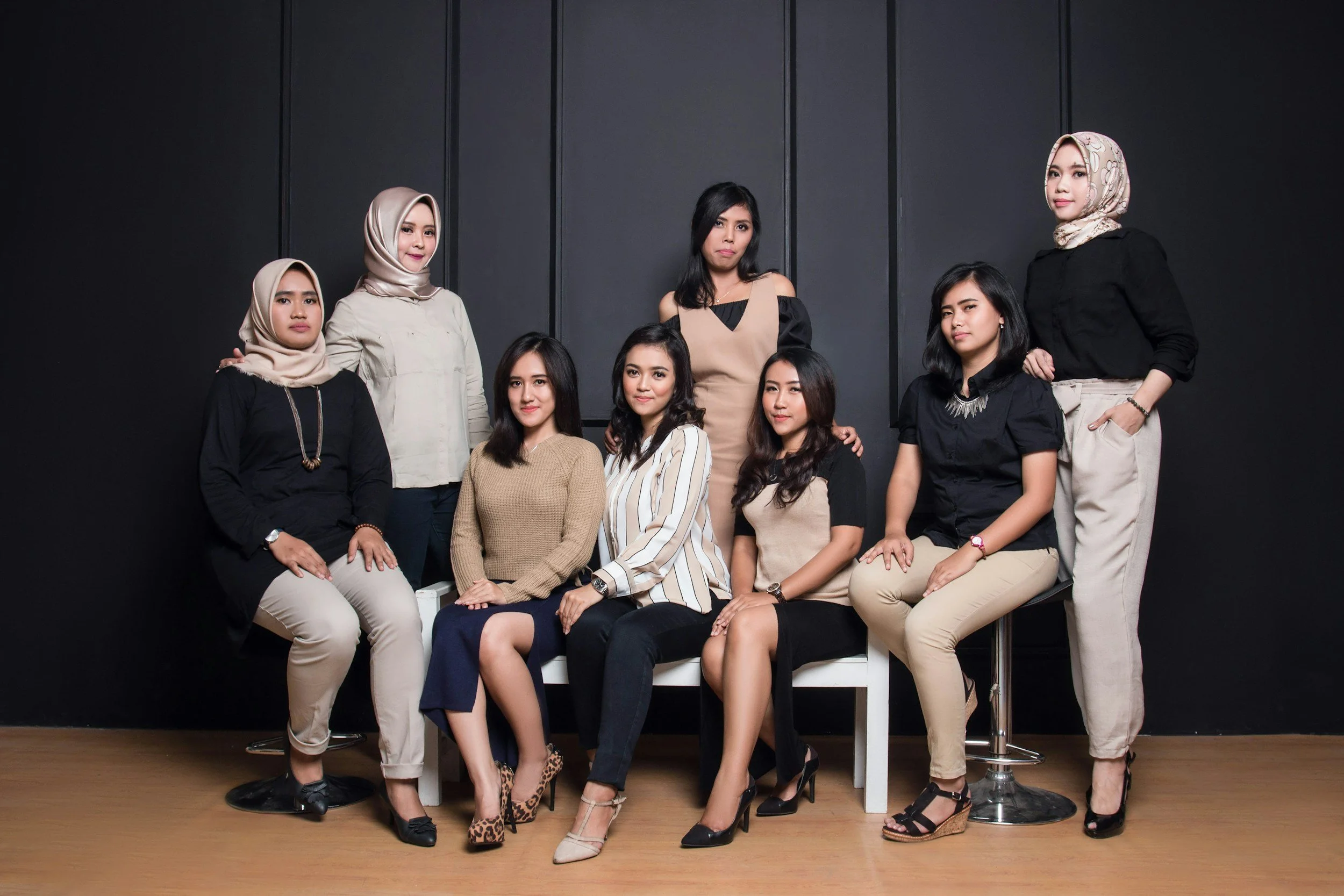
Subtle Influence: What Women Directors Told Us About Adapting Their Approach.
Boards across Asia Pacific vary widely in how they treat hierarchy and dissent. Most nations in the region are high in power distance and collectivism, with Australia and New Zealand the notable exceptions (Hofstede, 2011). In these settings, deference to the chair can limit who speaks, and gender can add a second layer of expectation (Steel, 2026).
We interviewed 66 non-executive directors across Northeast Asia, Southeast Asia, South Asia and Oceania. Three themes bear directly on women (Steel, 2026).
1. A systems approach to influence. Across nationalities, female interviewees often described reading the interpersonal and situational conditions first, then choosing a path to influence. This is a practical skill. It matches the cultural intelligence behaviour in Bourke and Espedido’s (2019) inclusive leadership model: attend to others’ cultures and adapt as required.
2. Conflicting advice on vulnerability. Inclusive leaders are expected to show humility and admit uncertainty (Bourke & Espedido, 2019). Yet many interviewees said they had received and given contradictory advice on when it is wise to show uncertainty. The advice shifted with cultural expectations of authority and with gender roles. The same behaviour that builds trust in one setting may be read as weakness in another.
3. A seat without a voice. An Australian director said it plainly: “you can have a seat at the table, but not a voice.” Directors in Australia and Singapore from minority gender, racial, caste or religious backgrounds expressed frustration at underrepresentation. Some described equity initiatives as “fluffy” and preferred data-driven approaches to structural inequality.
What the evidence suggests. Representation alone does not secure influence. Participation depends on the chair. Directors across cultures said respected chairs draw out quieter members and set the tone for open challenge. Pre-meeting conversations were also a common route to influence, particularly in high power distance cultures.
Implication for SMEs. Review who speaks in your leadership meetings, not only who attends. Give every leader a route to contribute, including private input before decisions. Measure outcomes such as promotion, pay and participation, so inclusion is judged on data rather than intent. These steps also reduce talent risk.
Limits. This is an exploratory study of volunteers. The chapter does not report results by gender, and the observations above are qualitative themes from interviews, not measured differences between women and men. The sample may also lean toward directors open to inclusive leadership research (Steel, 2026). Treat these findings as prompts for further research.
References
Bourke, J. & Espedido, A. (2019). Why inclusive leaders are good for organizations, and how to become one. Harvard Business Review, 29 March.
Hofstede, G. (2011). Readings in Psychology and Culture, 2(1). https://doi.org/10.9707/2307-0919.1014
Steel, A. (2026). Inclusion as strategic advantage. In The Handbook of Inclusive Leadership (Ch. 12). De Gruyter. https://doi.org/10.1515/9783111662145-013

Who Is Exposed When AI Arrives? Map the Risk Before It Maps You
Who Is Exposed When AI Arrives? Map the Risk Before It Maps You
AI exposure is uneven across job types. SMEs that identify it early can protect people and productivity at the same time.
AI is creating jobs and putting others at risk in the same period. LinkedIn research reported by The Guardian shows AI job postings have doubled since 2023 and pay on average more than twice as much as roles without AI work (Pardes, 2026). The same research finds that women are more likely to hold roles with high exposure to AI disruption, such as customer service (Pardes, 2026).
The pattern matters beyond gender. Roles built on routine, high-volume tasks are the most exposed, and they exist in almost every SME: customer service, administration, data entry and basic reporting. When the people in those roles are also concentrated in one demographic group, an AI rollout can widen existing pay and progression gaps.
The article also shows that holding an AI job is not enough. Women in AI roles were reported to cluster in lower-paid work such as data annotation. Across all AI occupations, men’s median pay was $45,000 higher, partly because of the jobs each group tends to hold (Pardes, 2026).
Implications for SMEs
Map exposure by role. List roles by how much of the work is routine and rule-based. This is a talent risk and a transformation risk in one exercise.
Check who sits where. Review the composition of exposed roles and of any new AI-related roles. Uneven patterns are an early warning.
Build pathways, not just tools. Offer paid time and structured training so exposed staff can move into higher-value work.
Document decisions. Record how roles were assessed and why. This supports fairness, and it supports your duty of care when work changes.
AI adoption can lift productivity. It lifts it further when the people closest to the work are brought along rather than replaced by default.
Limits. The figures come from a LinkedIn report as summarised by a news outlet, and the data reflect a largely US technology context. SMEs in other sectors and countries should test these patterns against their own workforce data.
References
Pardes, A. (2026, 8 October). Women hold just a fraction of new AI jobs but are overrepresented in roles with high risk of AI disruption. The Guardian.

Is Your Hiring Network a Hidden Filter?
Your Hiring Network Is a Hidden Filter
In fast-moving fields, companies hire quickly through familiar networks. The speed that feels efficient can quietly narrow your talent pool.
AI should, in theory, be a fair field. Few people have a decade of experience with technology that is a year old. Yet women working in AI told The Guardian that hiring has leaned on personal networks and loose signals instead (Pardes, 2026). The head of a non-profit advancing women in tech described companies hiring at pace through “the same networks, the same referrals, the same filters” (Pardes, 2026).
The numbers show the result. Women made up about a quarter of new AI hires in the past year, compared with 50% of new hires in non-AI roles. In executive AI roles the figure was 13% (Pardes, 2026).
Retention is the second half of the problem. The article reports that women leave the tech industry at higher rates than men, citing non-inclusive cultures and barriers to advancement (Pardes, 2026). One AI engineering lead described returning from leave to find tools and models had changed completely, and said women may lack the “infrastructure that makes keeping up possible” instead of the ability or interest (Pardes, 2026).
SMEs face the same pressure on a smaller scale. When a skill is scarce, the fastest route is a referral. When the workload is intense, the people with the most support at home can keep up and others can fall behind.
Implications for SMEs
Widen the funnel. Advertise roles beyond personal networks and state the skills required in plain terms.
Use structured hiring. Ask every candidate the same questions and score against agreed criteria.
Plan for re-entry. After any extended absence, offer a structured catch-up plan. Fast-changing tools make this a productivity measure as much as a fairness measure.
Track exits. Review who leaves and why. Patterns often show up before a formal complaint does.
Narrow hiring and weak retention both reduce the range of thinking available to the business, which is a talent risk with a direct cost.
Limits. The article is journalism and includes the views of advocates. It also describes a US policy context in which diversity programs have been scaled back and challenged (Pardes, 2026). Australian SMEs should check current local legal requirements before designing any program.
References
Pardes, A. (2026, 8 October). Women hold just a fraction of new AI jobs but are overrepresented in roles with high risk of AI disruption. The Guardian.

Who Really Holds Power in Your Small Business?
POWER SHAPES YOUR DECISIONS WHETHER OR NOT YOU NAME IT. LEADERS WHO CAN SEE IT MAKE BETTER CHOICES.

How to Build a transparent Leadership Team
How to Build a Leadership Team That Tells You the Truth
Groupthink is a risk for any close-knit team. Psychological safety is the most practical defence.

Why Your Quietest Person May Have Your Best Idea.
Many APAC SMEs hire for varied skills, backgrounds and ways of thinking. That is a sound talent strategy. Yet variety alone does not improve results. In a study of APAC board directors, effectiveness depended less on who sat in the room than on whose thinking shaped the outcome, and how (manuscript under review, 2026). Without skilled facilitation, diversity creates noise instead of clarity.

Change Without the Chaos: Five Tensions Every SME Leader Must Hold
Every small business is changing. AI tools, new customers and tighter rules all force decisions with no clean answer. Leaders often respond by picking a side: move fast or stay safe, share everything or share nothing. Each choice can leave a gap that later becomes a risk.

Six Cultural Fault Lines Every Growing SME Should Manage
Many APAC SMEs now hire across borders, serve customers in several markets and work with partners from different cultures. Teams of this kind carry both risk and opportunity. Common barriers include misunderstanding, stereotyping and ethnocentrism, the habit of treating one’s own culture as the standard (Jenifer & Raman, 2015).

When the Founder’s Voice Is the Loudest in the Room
APAC has a distinctive mix of family offices, private capital and promoter-led firms. Each brings governance challenges that larger, widely held companies rarely face (manuscript under review, 2026). The most common is founder dominance. A founder’s view can overwhelm dissent, even when the founder wants honest advice.

Leading Across Cultures in Asia Pacific: Silence Is Not Disinterest
APAC SMEs often employ people across several countries and cultures. Communication norms differ widely. In some settings, directors and staff wait to be invited before they speak. Leaders who misread that quiet as lack of interest or value lose the contribution.